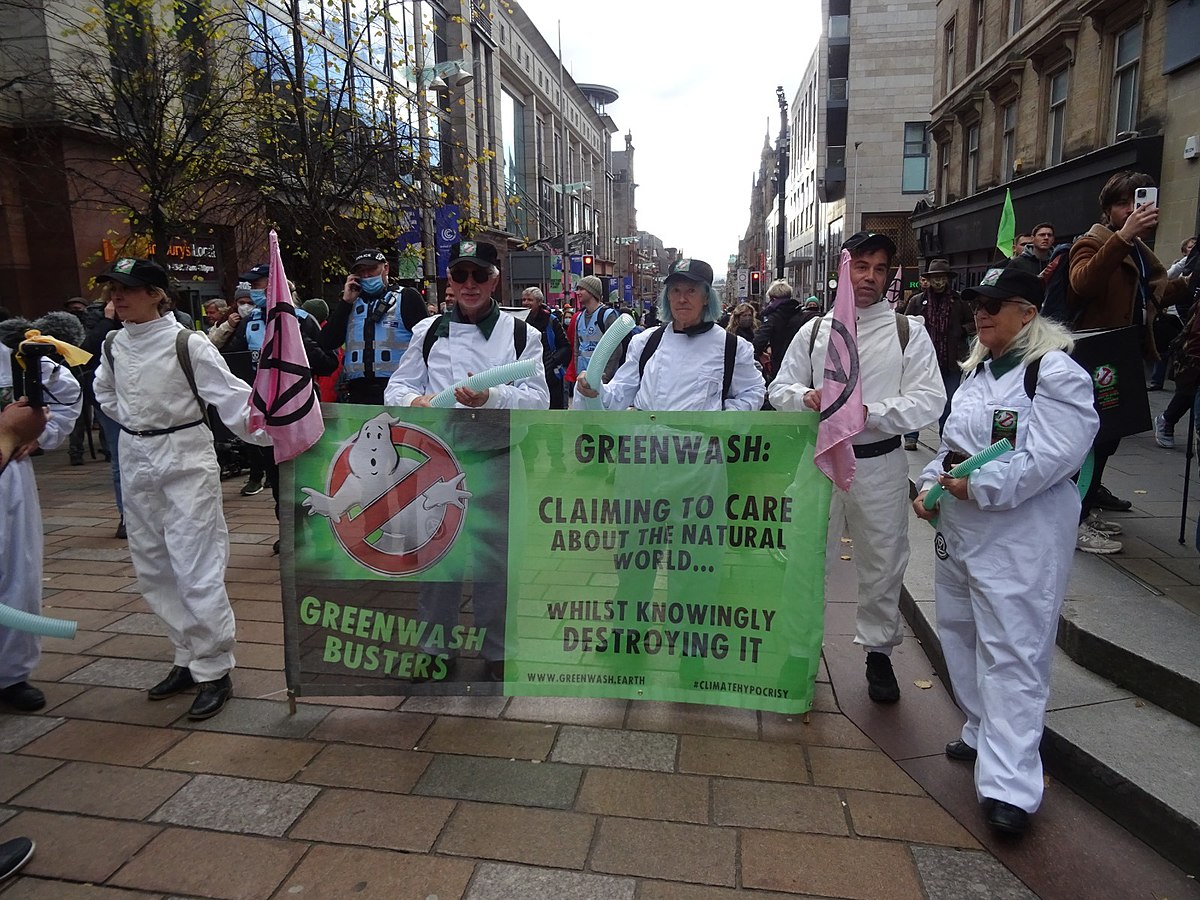
It has been hard to miss the explosion of environment-centric marketing, branding and posturing which has erupted in recent years. While this has certainly been driven by a genuine consumer desire for action towards sustainability, there is growing recognition that many of the assertions made are dishonest or misleading, in turn diminishing public perception that purchasing decisions can actually have a positive impact on the climate crisis. Greenwashing comes in several forms, as outlined in TerraChoice’s 7 Sins of Greenwashing, but all of them are essentially enabled by companies, politicians and celebrities being free to make environmental claims without proof or accountability. For example, the Team Canada sportswear designer Lululemon has been criticised for their ‘Be Planet’ ad campaign which vaguely portrays their brand as promoting healthy ecosystems despite their exceptionally poor environmental record. New regulations are being put in place in various parts of the world to more clearly define when and how green marketing can be used, but will they be enough to put an end to greenwashing?
An EU directive to be written into law by all member states by 2026 will ban all advertising and branding involving vague, unproven environmental claims, suggestions that companies are reducing their environmental impact via carbon offsets, and unapproved third-party sustainability endorsement labels. Similarly, expected to be signed into law in Autumn 2024 in the UK, the Green Claims Code will require business’ environmental marketing to be accurate, proven, clear and, importantly, consider products holistically - for example, an airline would not be allowed to call their flights ‘sustainable’ if they sold drinks in recycled plastic cups but their planes still produced huge emissions. Current US regulation does not address greenwashing as directly, but will soon require companies to quantitatively report their environmental impact, meaning at least that diligent consumers will have the ability to make informed decisions based on sustainability if they are willing to do the research.
Clearly these regulations, and their equivalents across the world, are encouraging steps which will counter flagrantly baseless green claims used in marketing. However, greenwashing extends beyond this sphere, infiltrating the policies of companies and governments. For example, fossil fuel producer Shell has publicly stressed its commitments to transitioning to cleaner energy, but pays annual membership to the API advocacy group which lobbies for far less progressive climate policy than Shell purports to adhere to. COP28, ostensibly a meeting between UN member states in order to discuss how best to reduce greenhouse gas emissions, was presided over by the CEO of the UAE’s state-owned oil company and attended by 2,456 fossil fuel industry lobbyists, who numbered far more than representatives of clean energy or small nations and indigenous groups worst affected by climate change. This raises the question of whether companies may be able to switch their public-facing climate policies to align with current regulation, while pushing, behind the scenes, for relaxation of these regulations so that they can continue with business as usual.
Overall, while a flurry of anti-greenwashing regulations will certainly help to counter greenwashing at its most open and obvious, they do not account for the covert pursuit of anti-environmental policy through backdoor channels. Further, more stringent measures are likely to be necessary to genuinely ensure that capitalism can be trusted to act sustainably.